If you own a small business in Boston and have been putting off a new sign because of cost, there’s a city program that most business owners have never heard of and it could cover the majority of your project.
The City of Boston’s ReStore Boston program reimburses eligible small businesses between 50% and 90% of their storefront signage costs, up to $8,000. And here’s the part most people miss: it also includes free professional sign design services. That means a $6,000 custom sign could cost you as little as $600 and a designer helps you plan it at no extra charge.
Here’s exactly how it works, who qualifies, and how to apply before the next deadline.
What Is ReStore Boston?
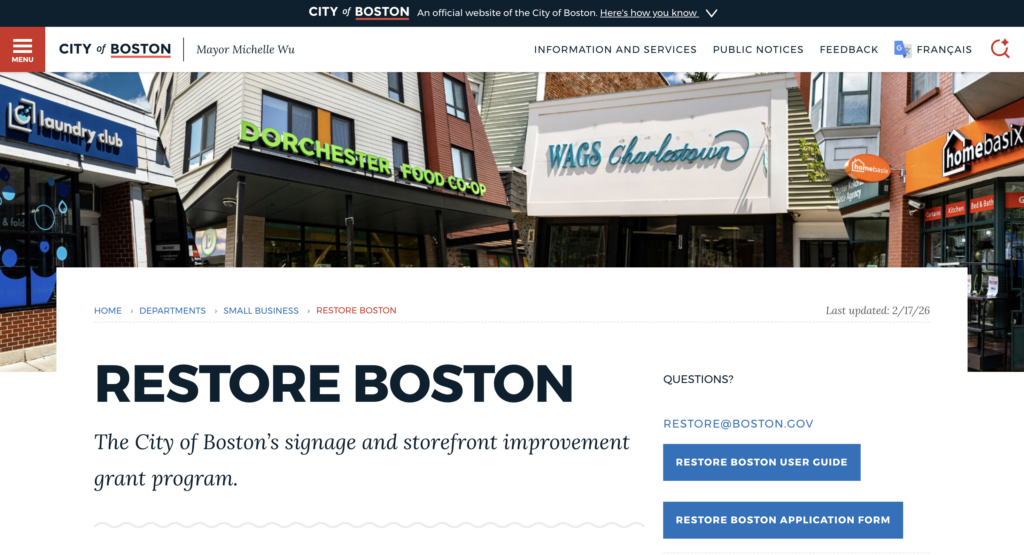
ReStore Boston is a grant program run by the City of Boston’s Office of Small Business Development. It provides financial and design assistance to small businesses looking to improve their storefront signage or building facades. The goal is to increase foot traffic and revenue for local businesses while strengthening Boston’s neighborhood commercial corridors and Main Streets Districts.
The program offers three types of assistance:
- Signage Grants — Covers 50–90% of the cost of a new sign, up to $8,000. You pay the contractor upfront and the city reimburses you.
- Facade Grants — For more extensive building improvements including accessibility upgrades, up to $200,000.
- Free Design Services — If accepted into the program, the city connects you with professional sign designers or architects at no cost to you.
Most signage projects are completed within 5 to 9 months of approval.
Who Is Eligible?
To qualify for the ReStore Boston signage grant your business must meet all of the following:
- Be a for-profit business with a physical storefront
- Have at least 3 years remaining on your lease
- Have written permission from your landlord to make improvements
- Have funds available to cover your portion of the cost upfront (the city reimburses you after)
- Be in good financial standing with the City — no outstanding bills with the Assessing Department, Boston Water and Sewer, Public Works, or Inspectional Services
- Not have solid roll-down grates or backlit plastic shield sign boxes (the city will help fund removal of solid grates if you’re accepted)
The majority of grants go to businesses in low-to-moderate income areas — so if your business is in Roxbury, Dorchester, East Boston, Jamaica Plain, Mattapan, or similar neighborhoods, your chances of approval are strong.
What Do You Need Before You Apply?
The city requires several documents before you can submit. Getting these together in advance will save you time:
- A Vendor ID number from the City of Boston Supplier Portal
- Your Employer Identification Number (EIN) from the IRS
- A Unique Entity Identifier (UEI) from SAM.gov
- A completed Property Affidavit form (available on the ReStore program page)
- Photos of your current storefront and existing signage
- Written permission from your landlord (if applicable)
- A copy of your lease showing at least 3 years remaining
Budget about one hour to complete the application once you have everything ready.
2026 Application Deadlines
ReStore Boston has five application deadlines per year. Miss the window and you’ll wait for the next one. The 2026 deadlines are:
- February 1
- April 1
- May 15
- September 1
- November 1
You’ll receive a response within one month of each deadline closing. The city also holds free virtual Office Hours every other Monday from 10:00 AM to 11:30 AM — a great way to get your questions answered before you apply.
The 5 Steps of the ReStore Process
Once you apply, here’s exactly how the process works:
- Application — Submit your completed form and all required documents by a deadline.
- Verification — You meet with the Office of Small Business team to discuss your business and your storefront vision.
- Design Services — The city connects you with a professional sign designer or architect who helps plan your new signage at no cost to you.
- Contractor Selection — You choose a licensed contractor (with city guidance) who handles all permitting and required department reviews.
- Fabrication and Installation — Your contractor builds and installs the sign. You pay them, invoice the city, and receive your reimbursement within 3 to 6 weeks.
What Types of Signs Qualify?
The ReStore program covers the redesign and installation of new exterior storefront signage. The most common qualifying sign types include:
- Channel letter signs
- Illuminated sign boxes
- Blade and projecting signs
- Window graphics and vinyl lettering
- Monument and post signs
Working with a licensed, experienced Massachusetts sign company matters here. Your contractor is responsible for pulling all necessary permits and meeting city requirements — so you want someone who knows Boston’s permitting process inside and out.
New England Sign — Your ReStore-Ready Partner in Massachusetts
New England Sign has been designing, fabricating, and installing custom signs for Massachusetts businesses since 1979. We know Boston’s permitting process, neighborhood zoning rules, and what it takes to get a sign approved, built, and installed on time.
From small retail storefronts in Jamaica Plain and Somerville to large-scale commercial projects at Fenway Park, we handle projects of every size with the same care and craftsmanship.
If you’re planning to apply for the ReStore program, we can provide a detailed quote to include in your application — and we’ll work alongside you and the city’s design team every step of the way.
The Bottom Line
ReStore Boston is one of the most valuable and underused programs available to Boston small business owners. With up to $8,000 in reimbursement, free professional design services, and five application windows per year, the opportunity is there — but you have to act before the next deadline closes.
If the next deadline is coming up, now is the time to get your documents together and reach out to a sign company who can provide a quote for your application.
New England Sign is ready to help. Contact us today and let’s talk about what your storefront could look like — and how to make the most of Boston’s grant money to get there.